Freeze the product
Freeze-drying explained
Understand what happens to the water inside the product.
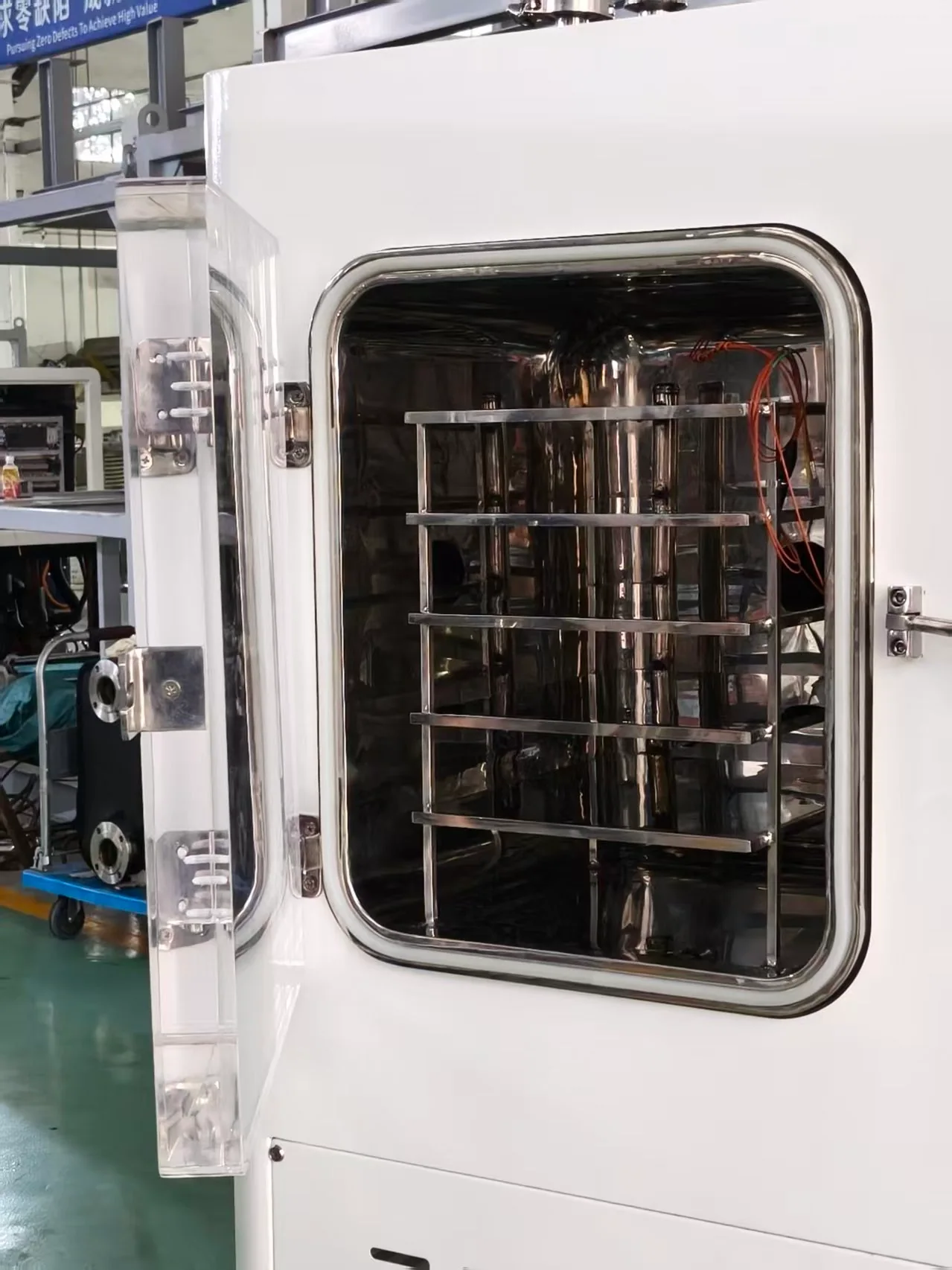
A freeze dryer first freezes the product, then removes the ice as water vapour under vacuum. The equipment protects the product while controlling temperature, pressure and time.
3 simple stepsFreeze, remove ice, finish drying
6 equipment functionsWorking together automatically
4 useful inputsProduct, batch, packaging and site
1 complete systemConfigured around what you need to dry
System architecture
One product cycle, four equipment jobs.
The machine freezes the product, adds gentle heat, moves water vapour and collects that water as ice. Controls keep every step working in the right order.
One coordinated system
The equipment follows what happens to the water.
The product stays on the shelves while its water changes from liquid to ice, then from ice to vapour.
- Water changes
- Liquid → ice → water vapour
- The machine controls
- Temperature · pressure · time
- The system records
- Recipe · trends · alarms · batch data
Add gentle heat
The shelves warm up slowly.
The added heat helps the ice leave without cooking or melting the product.Pull vapour away
Vacuum helps water vapour leave.
The water moves out of the product and travels toward the condenser.Collect the water
The condenser freezes the vapour.
The removed water is collected as ice inside the machine.
Automation & batch controlThe control system keeps temperature, pressure and time working
in the right order.
TemperaturePressureTimeEndpoint
How freeze drying works
Freeze the water. Remove the ice. Finish the drying.
Freeze drying does not boil the water out of the product. It freezes the water first, then removes it as vapour under vacuum and gentle heat.
The key ideaIce+Vacuum and gentle heat→Water vapour
The ice leaves without becoming liquid water first.
Step 1
Freeze the water
The machine cools the product until the water inside becomes ice.
What happens nextThe product is frozen and holds its shape.
Step 2
Remove most of the ice
Under vacuum, the shelves add gentle heat. The ice changes directly into water vapour and leaves the product.
What happens nextMost of the water has left the product.
Step 3
Remove the last moisture
The machine continues with mild heat to remove the small amount of moisture still attached to the product.
What happens nextThe product is dry and ready for the next step.
Why use freeze drying?
The process mainly removes water while helping the product keep its shape, ingredients or flavour. The exact benefit depends on what you need to dry.
What the equipment does
Six functions work together to complete one batch.
You do not need to select each part separately. The equipment should be configured around the product, batch size and production conditions.
Cooling
Makes the shelves cold enough to freeze the product and keeps the condenser cold enough to collect water vapour.
Product freezing · water collectionVacuum
Creates the low-pressure environment that allows ice to leave the product as water vapour.
Pressure control · vapour movementShelves
Cool the product first, then add gentle and controlled heat during drying.
Cooling · heating · uniform contactCondenser
Collects water vapour and freezes it as ice so it does not enter the vacuum pump.
Water capture · ice storage · defrostControls
Run the selected recipe and record temperatures, pressure, alarms and operating trends.
Recipes · sensors · recordsLoading & utilities
Connect the freeze dryer with product handling, electricity, cooling water, drainage and the production room.
Loading · utilities · room interfaceWhen a batch does not look right
The operating data helps the team know where to look.
The product, loading method, temperature, pressure and equipment condition are reviewed together.
Drying takes too longCheck the amount loaded, product thickness, shelf temperature,
vacuum level and condenser condition.
Products look different across the batchCheck filling, placement, shelf contact and whether every
position froze in the same way.
Pressure will not stay steadyCheck for leaks, too much water vapour, valve response and
vacuum-system condition.
Too much time between batchesCheck defrosting, cleaning, loading, unloading and the selected
operating sequence.
Start with the product
You do not need to choose a machine model first.
Tell us what you want to dry, the batch size, packaging, target moisture and site conditions. The engineering team can then recommend a suitable route.